

The North American motorcycle community is experiencing a surge unlike anything seen in the last decade, driven by one undeniable truth: the need for speed and power is real. Walk through any bike event, from sport‑bike meets in California to Harley‑Davidson gatherings in the Midwest and you’ll feel it instantly. Riders aren’t just talking about style, sound, or tradition anymore. They’re talking about horsepower, torque, acceleration, and how far the limits can be pushed. Whether it’s a stretched sport bike or a performance‑built Harley, the culture has shifted toward one unified obsession: more power.
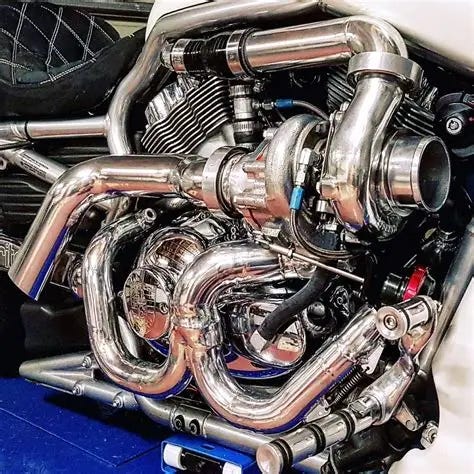
Manufacturers have noticed this shift and are responding with increasingly aggressive engineering strategies. Kawasaki remains the most daring, still holding the crown as the only major manufacturer offering a factory supercharged motorcycle with the Ninja H2 and H2R, machines that shattered expectations and proved forced induction could be reliable, controllable, and exhilarating straight off the showroom floor.
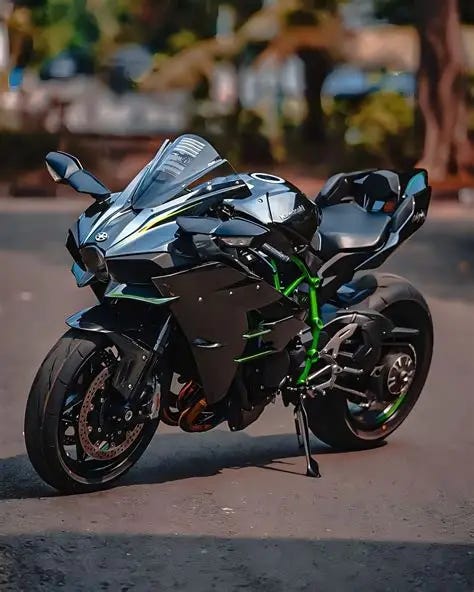
Harley‑Davidson, meanwhile, has leaned heavily into performance riding through its Milwaukee‑Eight platform and factory‑supported racing programs. The brand’s involvement in King of the Baggers has pushed engineers to rethink what a V‑Twin can do, resulting in engines that breathe better, rev harder, and deliver torque in a way that feels almost electric.
Sport‑bike manufacturers like Suzuki, Yamaha, and Honda are refining their liter‑class engines with improved airflow, lighter rotating assemblies, and more advanced electronics. These upgrades may not be as flashy as a supercharger, but riders feel them immediately. Throttle response is sharper, acceleration is smoother, and high‑RPM stability is better than ever. Indian Motorcycle has also stepped into the performance spotlight, using its racing programs to influence factory tuning and chassis improvements. Across the board, the message is clear: riders want stronger engines, and manufacturers are willing to deliver.
Factory engineering is being shaped directly by racing. MotoAmerica, King of the Baggers, and various superbike programs have become real‑time laboratories where manufacturers test new ideas under extreme conditions. Cooling systems are being redesigned to handle sustained high‑output riding. Compression ratios are climbing. Exhaust systems are being optimized for better flow without sacrificing emissions compliance. Even ride‑by‑wire systems are becoming more intelligent, giving riders precise control over increasingly powerful machines. What used to be race‑only technology is now appearing in everyday motorcycles, blurring the line between factory and competition.
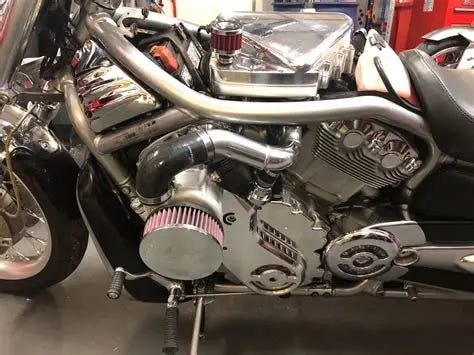
But even with all these advancements, many riders still crave more than what comes stock. This is where the underground performance scene continues to thrive. At bike nights, dyno days, and drag strips across North America, you’ll find riders who simply can’t get enough power. Some turn to nitrous oxide for instant bursts of acceleration. Others install turbo systems capable of pushing sport bikes well past 300 horsepower. Harley riders, hungry for torque that feels endless, are embracing superchargers that deliver immediate, arm‑stretching pull. It’s not uncommon to see a nitrous bottle tucked under a seat or a turbo peeking out from behind a fairing, visual proof that the horsepower chase is alive and well.
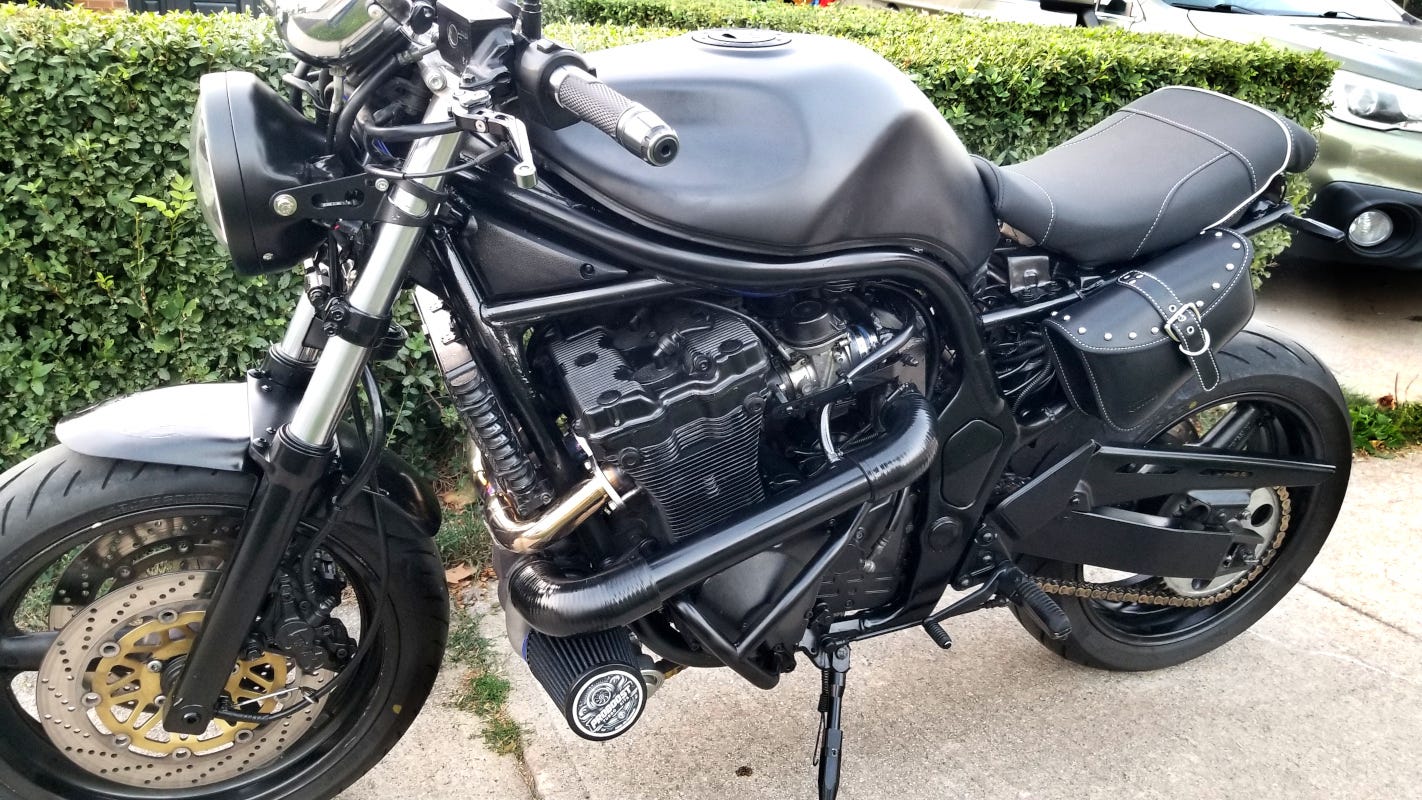
Turbo Bandit from HardRider MotoWerks
This raises a question many riders are asking: besides Kawasaki, will any other manufacturer step into the world of factory forced induction? The short answer is that the industry is quietly preparing for it. Suzuki has filed patents for turbocharged motorcycle designs, though none have reached production. Honda has experimented with turbo prototypes internally, exploring ways to balance power with efficiency. BMW has dabbled in forced‑induction concepts as well, though nothing has been officially announced. Harley‑Davidson has not revealed any plans for factory turbos or superchargers, but their racing programs prove they have the capability if they choose to pursue it. With rider demand climbing and technology advancing, it’s only a matter of time before another manufacturer joins Kawasaki in the boosted arena.
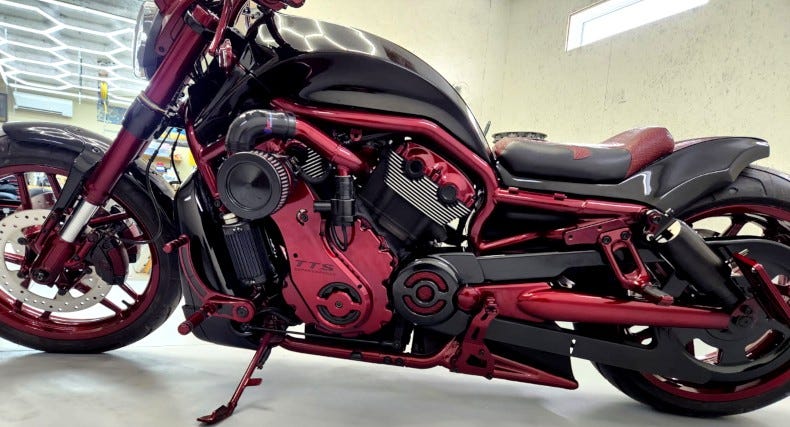
Supercharger Vrod from HardRider MotoWerks
The performance culture dominating North America isn’t a passing trend, it’s becoming the identity of modern motorcycling. Riders want machines that accelerate harder, pull stronger, and deliver an experience that feels raw and thrilling. Whether it’s a turbocharged Hayabusa, a nitrous‑fed ZX‑10R, or a supercharged Harley bagger, the pursuit of power is shaping the future of the industry. At every event, you’ll hear riders comparing horsepower numbers, discussing tuning strategies, and debating which forced‑induction setup delivers the best rush. The community has spoken, and the message is unmistakable: power isn’t optional anymore, it’s the new standard.
Addendum: Engine Rebuilds vs. Superchargers
Many Harley riders looking for more power start with traditional engine upgrades, cams, pistons, injectors, ported heads, and high‑flow intake systems. Harley’s Stage 4 kits are a prime example of this approach, offering significant gains in horsepower and torque through displacement increases and aggressive cam profiles. A Stage 4 build transforms the character of the engine, delivering stronger mid‑range pull, quicker throttle response, and a more muscular top‑end. It’s a proven path to more performance, and for many riders, it feels like the natural next step.
But when you compare a Stage 4 build to a supercharger, the difference is undeniable. Even a well‑executed Stage 4 Harley does not come close to the raw, immediate, and overwhelming power a supercharger delivers. A supercharged Milwaukee‑Eight can produce torque levels that dwarf any naturally aspirated build, and the acceleration is in a completely different league. What surprises many riders is that the cost of a Stage 4 build and a supercharger system often ends up being very similar sometimes nearly identical once labor, tuning, and supporting upgrades are factored in.
Both approaches put additional stress on the engine, but with quality parts, proper maintenance, and a professional tune, riders can enjoy long‑term reliability. Modern components are designed to handle increased loads, and tuners have become exceptionally skilled at managing heat, timing, and fueling to keep boosted or high‑compression engines running safely. The key is choosing the right builder, the right parts, and the right tune, because when those three elements align, the rider is rewarded with a machine that performs flawlessly and delivers the kind of power that defines today’s motorcycle culture.