

For many motorcycle enthusiasts, buying a motorcycle should be a straightforward process. You find the bike you want, agree on a price, transfer ownership, obtain insurance, register it, and ride. However, the reality for riders in Ontario, is often very different from the experience of riders in other provinces or the United States.
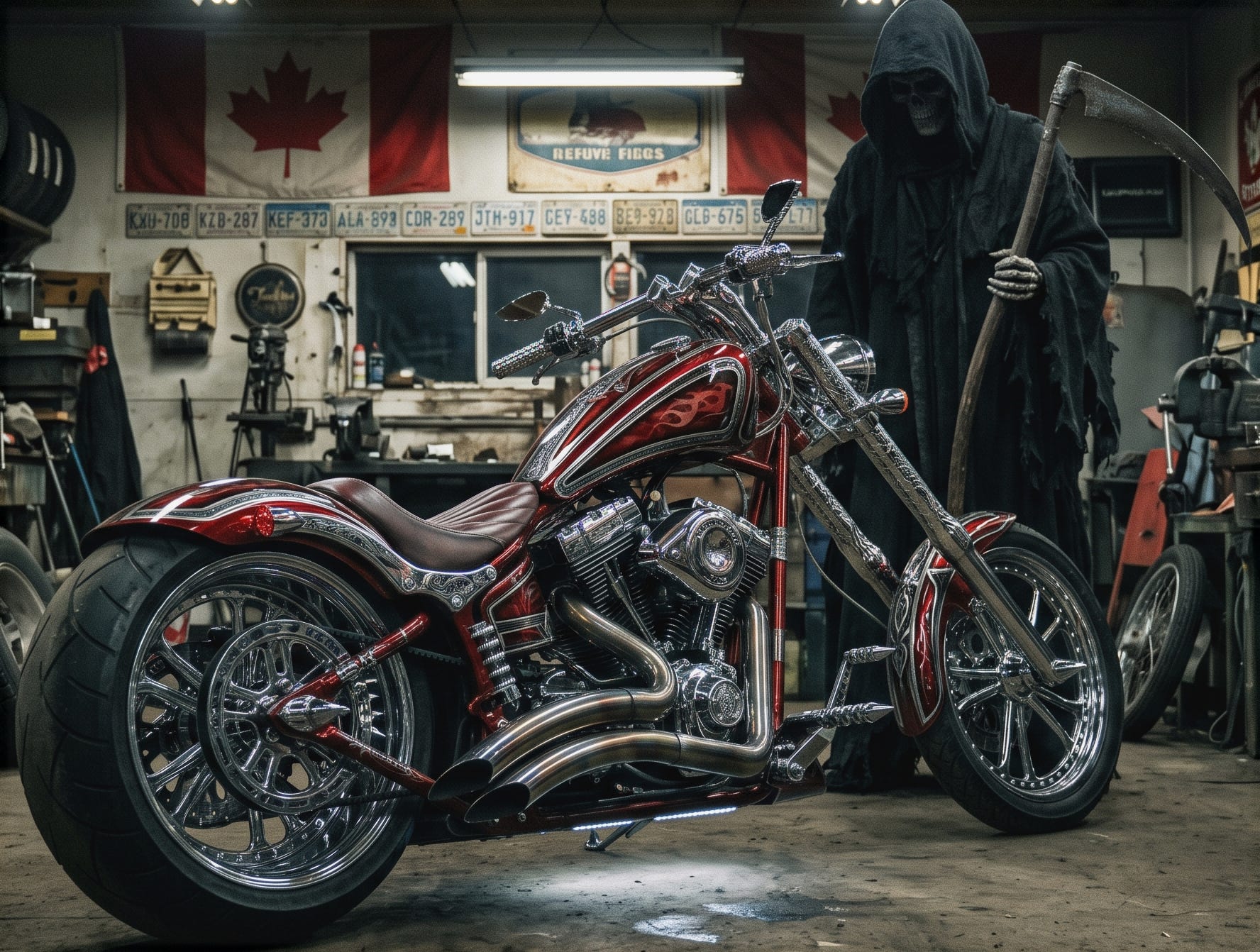
The Reaper (Ontario Government new rules) has just killed customized motorcycles in Ontario. No more mods, slipons, arms, bars, wheels, lighting. No safety certificate, no ability to buy or sell anything with mods if you want to plate and ride.
The contrast between the two countries has become increasingly noticeable in recent years. While many American riders can purchase and register motorcycles with relatively few regulatory hurdles, Ontario riders face a combination of “new” safety certification challenges, highest insurance rates in North America , modification restrictions, and rising ownership costs. These factors are making motorcycle ownership almost impossible.
For generations, motorcycles have represented freedom, independence, self-expression, and mechanical creativity. Riders built custom choppers in their garages, modified sport bikes on weekends, and spent countless hours personalizing machines that reflected their individual style and passion. For many riders, motorcycling was never simply transportation. It was a culture, a lifestyle, and a cherished hobby.
Today, however, the Ontario Government has ended that freedom.
Across Canada, particularly in Ontario, growing regulation, rising insurance costs, “new” safety inspections that will only give a pass to stock motorcycles and shrinking insurer appetite for certain motorcycles have created what many describe as the end for motorcycles in Ontario.
FIRST PUNCH - the safety certification process
Ontario now requires a completely new level of Safety Certificate before a used motorcycle can be plated following a transfer of ownership. The inspection requirements have become so detailed and restrictive that any modification to a motorcycle will most likely not pass the safety inspection. Only stock motorcycles seem to get a pass. No safety certificate, no plate, no riding. Riders who once freely customized exhaust systems, lighting, suspension components, handlebars, custom wheels, or bodywork are now blind-sided by the fact that even the smallest change will not pass inspection.
The other side to this is, if you already have a custom motorcycle, you won’t be able to sell it in Ontario, because if you can’t get a safety certificate, no one will buy it.
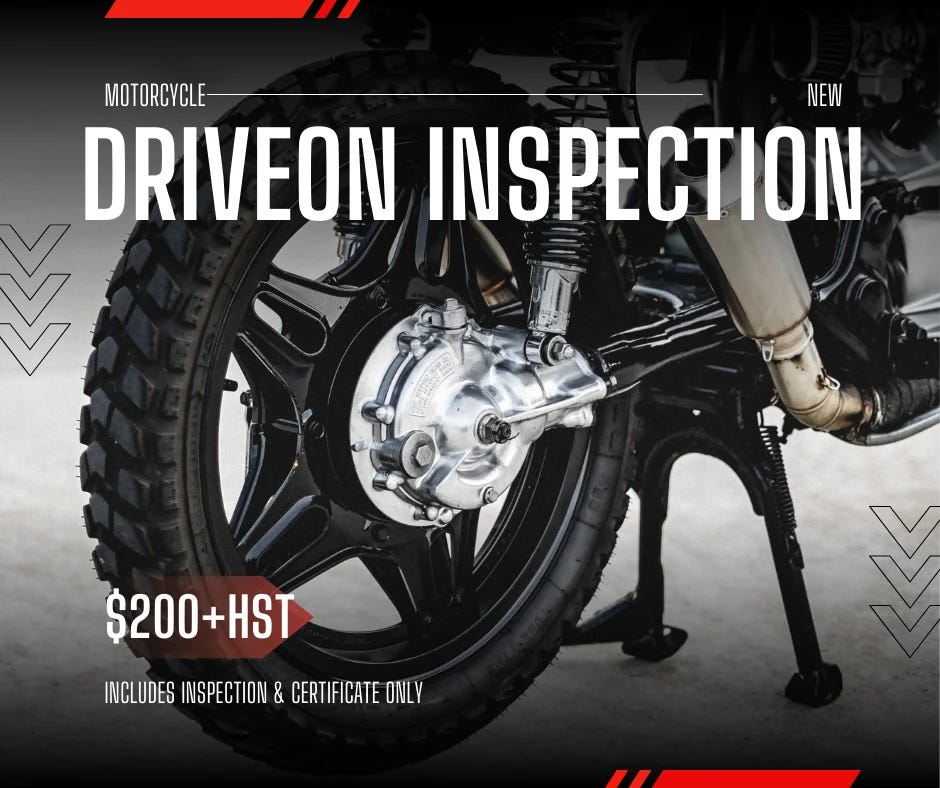
The New Outrageous Motor Vehicle Inspection (DriveOn)
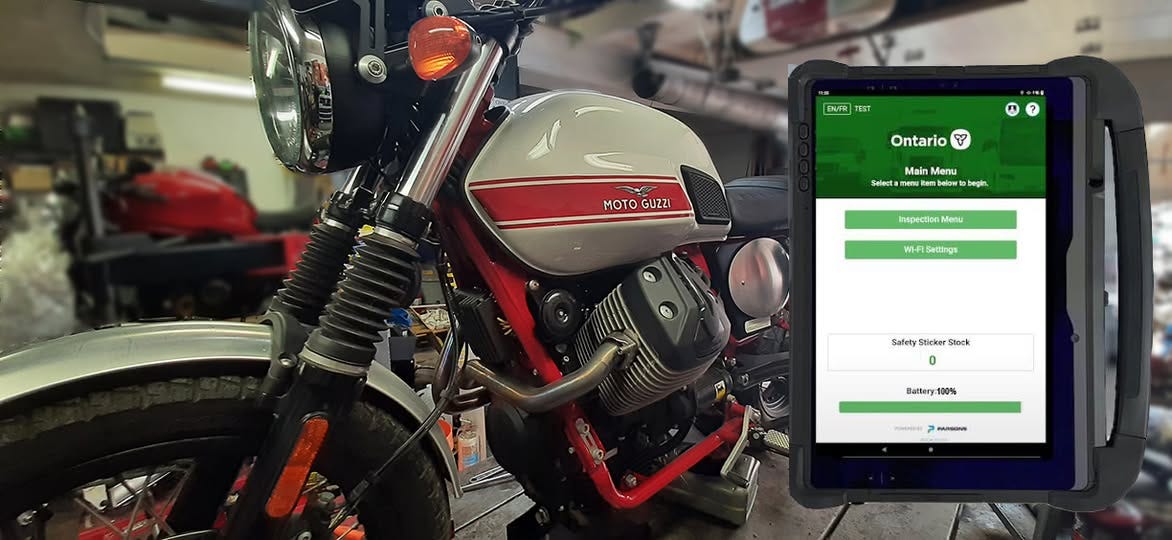
The Ontario Ministry of Transportation (MTO) replaced the decades-old paper-based Motor Vehicle Inspection Station (MVIS) system with DriveON, a digital platform managed through government-issued tablets that record inspection data, photos, and measurements directly to provincial databases. This has been the single most underhanded assault to the motorcycle hobby industry ever in the history of Canada. It also affects hot-rod automobiles too as hobbyist car clubs like to customize and modify new and old vehicles.
Here’s How and When it All Happened
March 31, 2025: The traditional paper-based MVIS program was officially discontinued.
April 1, 2025: DriveON became mandatory across Ontario for all passenger vehicles, light-duty trucks, motorcycles, and commercial safety inspections. Physical inspection certificates are now transmitted electronically to ServiceOntario, and consumers can verify their certificate status digitally via the DriveON Portal.
Is It the Same in Other Provinces?
No. Motor vehicle licensing and road safety standards are under provincial and territorial jurisdiction in Canada, meaning each province sets its own rules, timelines, and formats:
Jurisdictional Independence: Ontario’s DriveON platform is an Ontario-specific government program. Other provinces have not adopted DriveON.
Varying Inspection Rules:
In Ontario, a safety certificate is required primarily when transferring ownership of a used vehicle, registering an out-of-province vehicle, or upgrading a rebuilt vehicle.
In provinces like Nova Scotia or New Brunswick, passenger vehicles must undergo mandatory periodic safety inspections (e.g., every 1 to 2 years), many of which still rely on paper forms or provincial inspection stickers.
In provinces like Alberta or British Columbia, private passenger vehicles generally do not require regular safety inspections for in-province ownership transfers, restricting inspections mostly to out-of-province imports, commercial fleets, or salvage/rebuilt titles.
Digital Inspection Adoption: While several provinces (such as Alberta and Saskatchewan) use digital portals to track commercial vehicle inspections or out-of-province certification, none share a unified, standardized federal digital app or system with Ontario. So it would seem that Ontario is the worst of the worst in Canada and the worst in North America for anyone wanting to modify their motorcycle or automobile, new or old.
SECOND PUNCH - the insurance industry
Even after successfully passing a safety inspection, motorcycle owners are still not out of the woods. Owners of high-performance sport motorcycles encounter additional challenges, with some insurance companies declining coverage entirely on certain models while others charge premiums that many motorcycle riders or even automobile drivers consider highly unreasonable and unaffordable. The frustration felt by enthusiasts is easy to understand. The Ontario insurers have the highest rates in North America. Worse yet, the insurers seem to have a monopoly on what they want or don’t want to insure and it would seem price fixing must be part of this.
Even getting past the safety requirements, if your vehicle is deemed too sporty or has too much power, the insurer may refuse to insure your vehicle regardless of the rate. Also, more recently some insurance companies will not even consider insuring your motorcycle if it has been modified. This is a more recent development and is now pushing riders to the dark side - not insuring at all. This move is fully the fault of the insurance industry and the government.
How the Ontario insurance industry has allowed this to happen is beyond the pale and certainly beyond anything we have known in the past. If one didn’t know any better, it would seem to border on the edge of corruption.
Ontario needs an overseer to address this assault on drivers and riders. Why is Ontario by far the highest place to purchase insurance for vehicles in North America.
THIRD PUNCH - riding dark without insurance or registration
Ontario motorcycle insurance costs are the highest motorcycle insurance rates in North America, if not the world. For younger riders or owners of super sport motorcycles, annual premiums can reach levels that are just plain shocking.
This brings up a completely new issue and problem. Many riders purchase used motorcycles, don’t register because they can’t get past the safety and don’t insure because they can’t afford the annual rates or they are refused simply based on the type of motorcycle they want to insure. The Ontario government has made it almost impossible for young riders to purchase and own motorcycles.
Adding further frustration is the reality that motorcycle riding in Canada is largely seasonal. In many parts of the country, motorcycles spend months parked in garages during winter. Yet insurance policies generally remain annual contracts at premium prices, substantially more than cars or trucks. Riders question why they must purchase insurance for twelve months while being able to ride for only part of the year.
Some riders remember a time when seasonal adjustments, storage coverage, and flexible policy arrangements were easier to obtain. Whether that perception is entirely accurate or not, the sentiment within the riding community is unmistakable: motorcycle ownership has become increasingly expensive, increasingly complicated and near impossible to own a motorcycle.
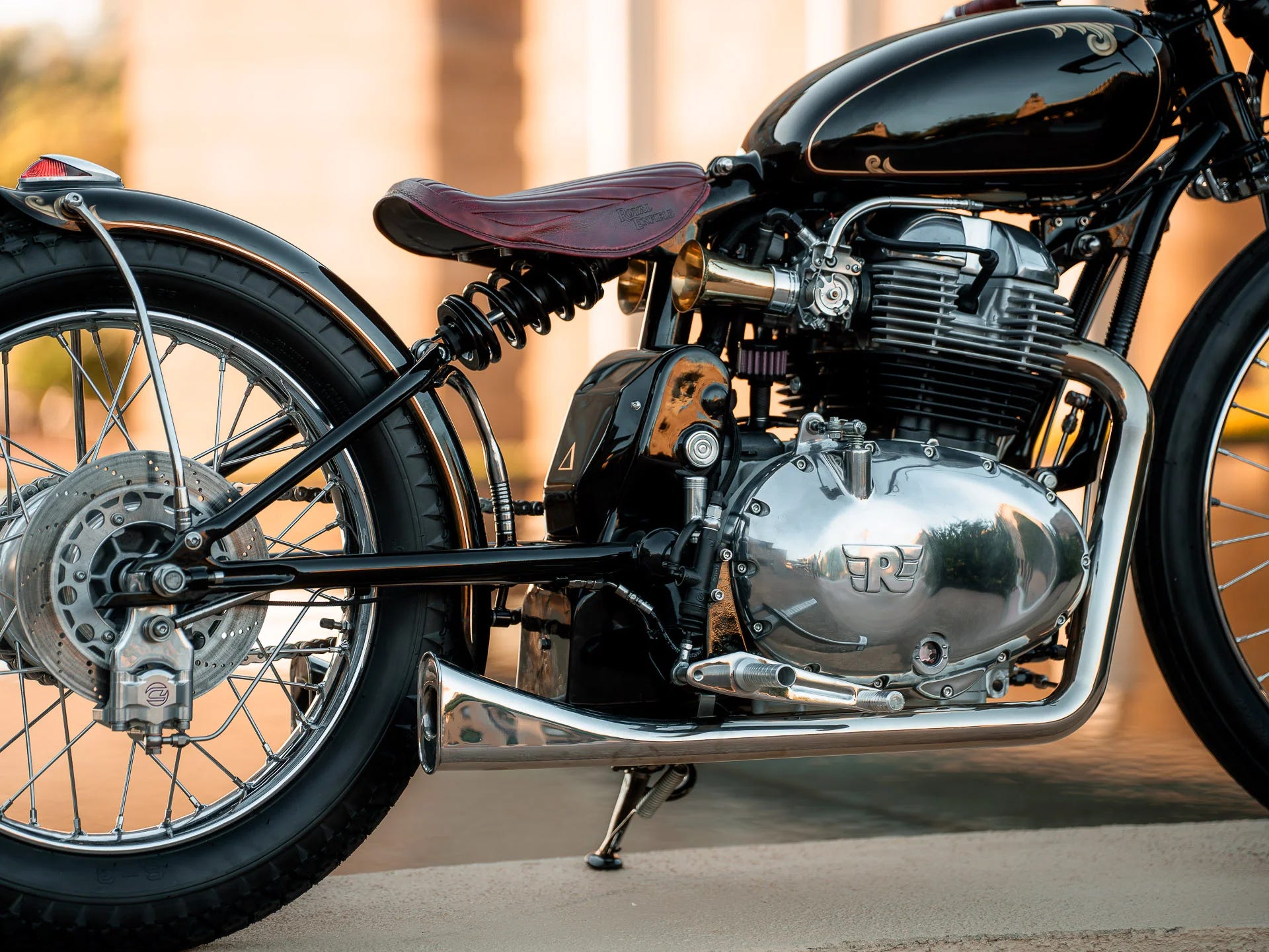
Riders see a broader pattern in which individual freedoms, personal hobbies, and traditional Canadian lifestyles face increasing regulation. Some riders view the current environment as evidence that governments and regulators no longer understand motorcycle culture. What previous generations viewed as harmless customization and personal expression is now viewed through the lens of compliance, liability, documentation, and risk management.
The result, according to critics, is the gradual disappearance of an entire culture.
Custom motorcycle building, once a thriving hobby, is now impossible in Ontario.
Garage builders who spent decades fabricating unique machines, find themselves out of business. Hot-rod car enthusiasts express many of the same concerns. What was once celebrated as craftsmanship and ingenuity is now entirely viewed through the lens of regulation and impossible to plate and ride on the road.
By comparison, much of the United States remains considerably more accommodating toward motorcyclists. Many states do not require motorcycle safety inspections, and motorcycle registration processes are less burdensome than those found in Canada and particularly Ontario. Riders often enjoy greater flexibility when customizing their machines, and insurance markets tend to offer broader competition and more options.
The difference in approach has become increasingly difficult for Ontario motorcycle riders to ignore.
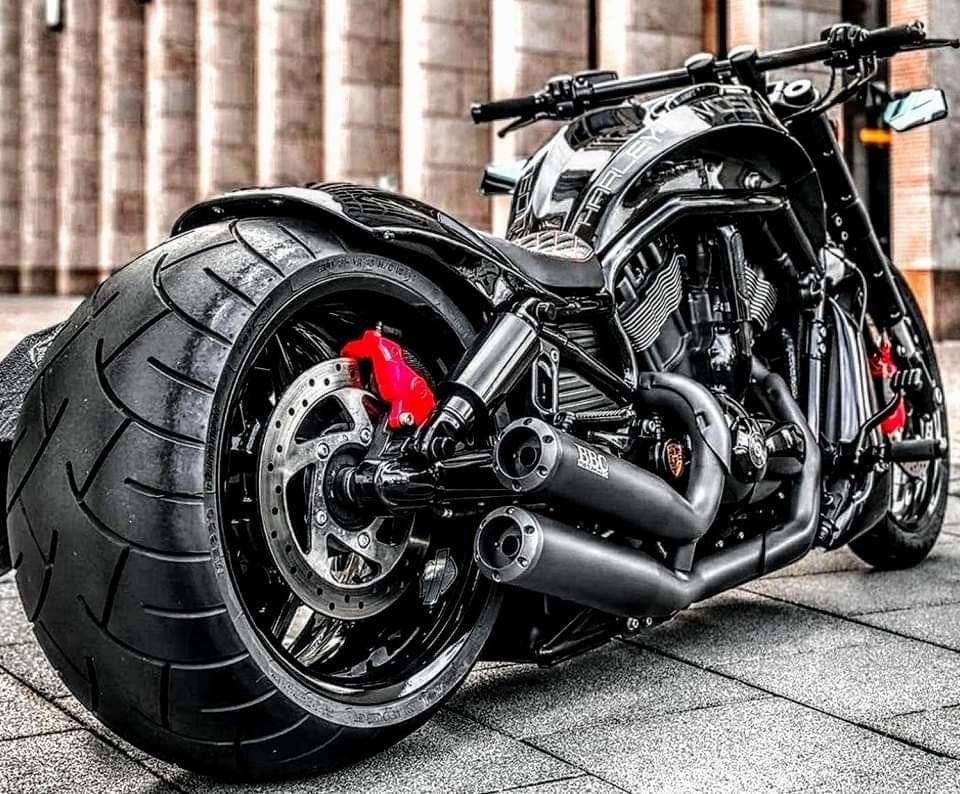
One fact is becoming clear: many Ontario motorcycle enthusiasts feel that the barriers to purchasing and riding a motorcycle has never been more difficult. Between inspection requirements, insurance restrictions, escalating costs, and uncertainty surrounding modified motorcycles, the culture they once knew is disappearing.
Certainly for new riders putting a custom bike on the road is now near impossible. Likewise if you have a custom motorcycle that was previously plated prior to the new safety regulations, you will find that you can not even sell your bike in Ontario because the new buyer will not be able to get a safety certificate to be able to plate the bike.
The question now is whether policymakers, regulators, insurance companies and even government officials are listening. Or whether motorcycle culture in Canada is headed toward a future where only the wealthy, the fortunate, and the owners of completely stock machines will remain on the road.
Over regulation in Ontario has definitely put an end to the hobby like status of motorcycles. We hope that the new Ontario DriveON safety regulations will adjust so it is not the harshest in North America and the Motorcycle Insurance industry in Ontario finds an overseer with government connections to check the motorcycle industry’s rates and refusal to insure some models of motorcycles wherein the government themselves have allowed into Canada. Afterall what happens when a new rider purchases their first bike at a motorcycle dealership only to find that no insurance company will insure it?
Now for all you motorcycle riders and shops outside of Ontario and Canada, keep on building the beautiful custom masterpieces that you do. Happy, safe riding…
HardRider News Media