

The pursuit of horsepower has always been at the heart of litre-class sport bike culture, and in 2026 the performance aftermarket is stronger than ever. Riders of machines such as the Suzuki Hayabusa, Kawasaki Ninja ZX-10R, Kawasaki ZX-14R, BMW S1000RR, Yamaha YZF-R1, Honda CBR1000RR-R Fireblade, and Ducati Panigale V4 continue pushing the limits of what production motorcycles can achieve. While modern superbikes now leave the factory with sophisticated electronics, ride-by-wire systems, and power outputs approaching or exceeding 200 horsepower, many enthusiasts are still searching for that next level of acceleration. The question remains: what is the best way to add power to a motorcycle in 2026.
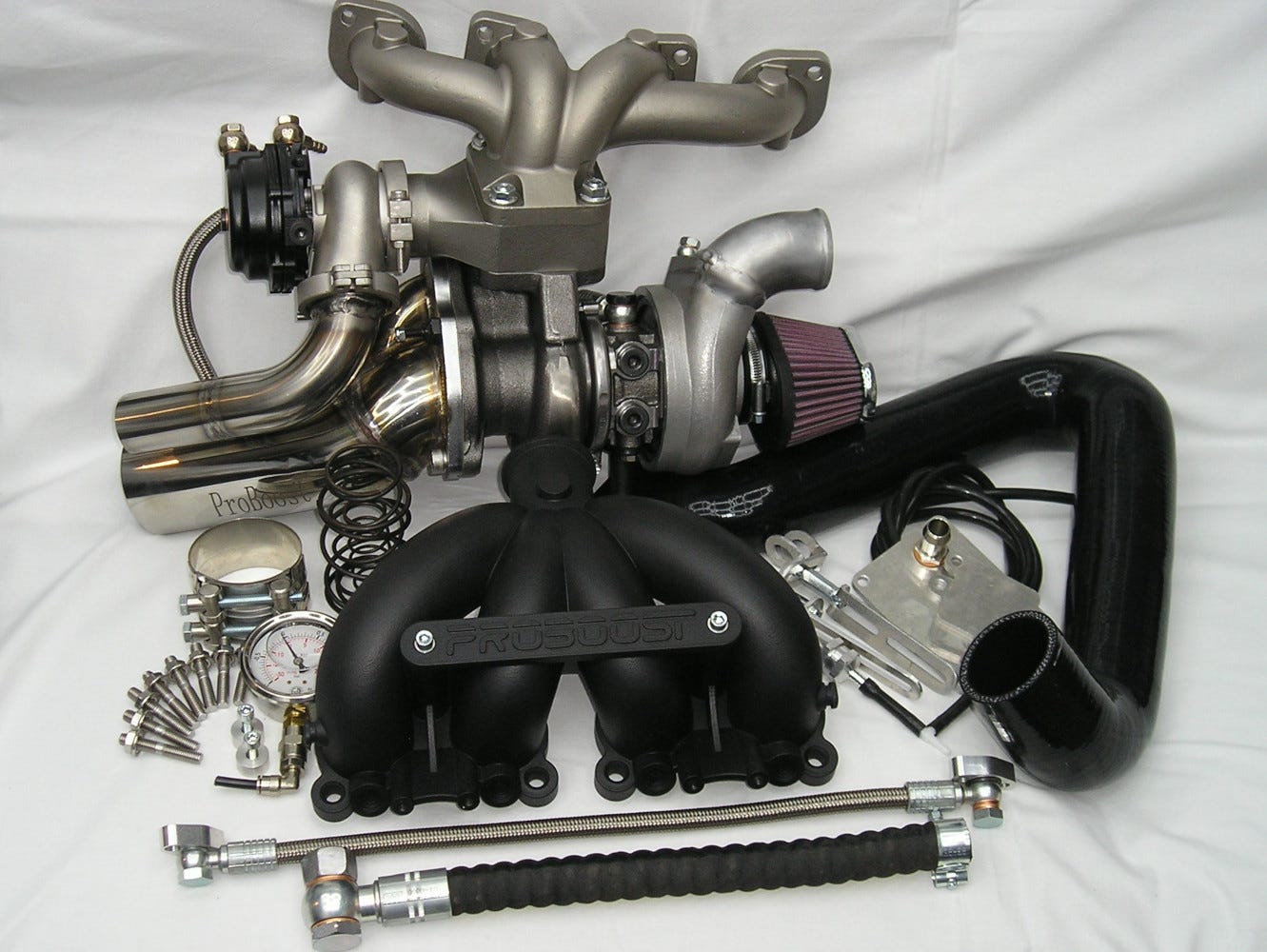
ProBoost Turbo Hayabusa Gen3 - Gen1 and Gen2 also available from $2900
Gen3 pictured here with new faster air-flow Plenum (airbox in black)
ProBoost turbos are popular world-wide with over 35 years of development experience.
For riders looking for meaningful gains, forced induction continues to dominate the conversation. Turbocharger and supercharger systems remain the most effective bolt-on methods for dramatically increasing horsepower without requiring a complete engine redesign. Companies specializing in motorcycle forced induction continue to expand offerings for Hayabusas, GSX-R1000s, ZX-14Rs, and select European superbikes, while Rotrex-based centrifugal supercharger packages remain available for several high-performance platforms.
Turbocharging remains the king of ultimate horsepower. A properly designed motorcycle turbo system uses exhaust energy to spin a turbine that forces compressed air into the engine. Because turbos utilize energy that would otherwise be wasted through the exhaust, they are capable of producing enormous power increases. Modern turbo kits benefit from improved ECU tuning, advanced fuel management systems, better intercooling technology, and more reliable electronic boost control than systems available just a decade ago. Riders building drag-oriented Hayabusas and ZX-14Rs routinely choose turbochargers because they offer unmatched top-end power potential. Today’s kits also feature improved fabrication quality, better wastegate control, and more sophisticated engine management solutions that make high-power builds more reliable than ever.
One of the biggest trends for 2026 is the growing popularity of street-friendly turbo systems. Rather than chasing maximum dyno numbers, many riders are opting for moderate boost levels that preserve reliability while delivering explosive acceleration. Advances in ECU flashing technology and custom engine calibration allow bikes to maintain excellent drivability while supporting substantial power increases. The result is a motorcycle that behaves normally in traffic but transforms into a missile when the throttle is opened.
Unlike a turbocharger, a supercharger is mechanically driven by the engine through a belt system. This eliminates turbo lag and provides immediate boost across the rpm range. Rotrex centrifugal superchargers continue to be among the most popular choices in the motorcycle world, with applications available for performance models including the Hayabusa, GSX-R1000, ZX-14, Yamaha R1, and several Triumph and Honda platforms. Downside of superchargers is the high cost.
Another technology maintaining strong influence in the performance market is nitrous oxide injection. Although nitrous has been around for decades, modern systems have evolved considerably. Progressive controllers, advanced solenoids, and sophisticated fuel management strategies make today’s nitrous systems safer and more tunable than earlier generations. Nitrous remains one of the most cost-effective ways to gain horsepower because it requires significantly less hardware than forced induction systems.
The biggest advantage of nitrous is flexibility. Riders can operate a naturally aspirated motorcycle during everyday riding and activate additional horsepower only when needed. This makes nitrous especially popular among drag racers and roll-racing enthusiasts looking for temporary power increases without the complexity of a turbo or supercharger installation. For budget-conscious riders, nitrous often delivers the best horsepower-per-dollar value available in the aftermarket.
Beyond traditional power adders, 2026 is also seeing rapid growth in supporting technologies. Modern ECU tuning has become one of the most important upgrades for any sport bike. Factory calibrations are designed to satisfy emissions requirements, noise regulations, and fuel economy standards. Professional ECU flashing can optimize ignition timing, fuel delivery, throttle response, and rev limits, often unlocking power that already exists within the motorcycle. While ECU tuning alone will not rival forced induction gains, it frequently serves as the foundation for every serious performance build.
High-flow exhaust systems remain another essential modification. Lightweight titanium and stainless-steel systems improve exhaust flow, reduce weight, and enhance engine responsiveness. When combined with ECU tuning, performance air filters, velocity stack upgrades, and larger throttle body configurations, riders can achieve noticeable gains from naturally aspirated engines while maintaining factory reliability.
Electronic innovation is also shaping the future of motorcycle performance. Advanced data logging, real-time fuel mapping adjustments, wideband oxygen sensor integration, and smartphone-based tuning interfaces have become increasingly common. These technologies allow riders and tuners to optimize performance with unprecedented precision. The days of relying solely on mechanical modifications are fading as digital engine management takes center stage.
HardRider MotoWerks is the North American distributor for ProBoost Turbos.
Complete turbo kits from $2900. More info: hardrider.net
One emerging area attracting attention is electrically assisted forced induction. The concept gained interest following the introduction of advanced electric-supercharger technology in new motorcycle engine developments, pointing toward a future where boost pressure may no longer depend entirely on engine speed or exhaust flow. While still in its early stages within the motorcycle aftermarket, electric-assisted boosting represents one of the most intriguing performance developments on the horizon.
So what is the best way to add power to your motorcycle in 2026? The answer depends on your goals. Riders seeking the highest possible horsepower figures should still look toward turbocharging. Those prioritizing immediate throttle response and predictable street performance may find supercharging to be the ideal solution. Budget-focused enthusiasts wanting substantial gains without major mechanical changes can achieve excellent results with modern nitrous systems. Meanwhile, riders interested in balanced performance upgrades should begin with ECU tuning, exhaust improvements, intake optimization, and professional calibration before exploring forced induction.
The litre-bike performance market has never offered more options. Whether building a 400-horsepower turbo Hayabusa, a supercharged street machine, or a finely tuned naturally aspirated superbike, 2026 provides enthusiasts with technology that was once reserved for professional race teams. As electronics, tuning software, and forced-induction engineering continue to advance, the future of motorcycle performance looks faster, smarter, and more exciting than ever before.